|
Wednesday, March 15, 2017
Wednesday Wisdom - Real Men Don't Wear Knee Pads


Wednesday, March 8, 2017
Wednesday Wisdom - Don't Pull Up the Bonus Broccoli!
|

Wednesday, March 1, 2017
Wednesday Wisdom - "Choose It or Lose It" - Part Two
|

Wednesday, February 22, 2017
Wednesday Wisdom - "Choose It or Lose It" - Part One
"CHOOSE IT OR LOSE
IT" - Part One

"Emotions [can] run high over who gets Grandma's pearl
necklace or Dad's fishing pole. Disagreements over who gets what can lead to
bawling and brawling between siblings that can scar relationships
forever."
John Ewolt
Some families could care
less about their parents' and grandparents' personal property, as I described
in last week's Wednesday Wisdom. Other families, however, deeply value their
heirlooms and personal artifacts. In such families, the failure to plan properly
for their division and distribution can create significant family harmony
issues.
When most people plan
their estates, they largely focus on how their money and their property will be
distributed, but they usually pay scant attention to the "stuff."
While those personal effects may have little monetary value, often they carry
tons and tons of sentimental value. Unfortunately, dividing up those items is
the one part of the estate settlement process that is most likely to create
lasting relational problems in a family.
Estate planning clients
(and their advisors) often make at least one of these potentially devastating
mistakes:
1.) They leave the issue for others to address after their
death.
2.) They fail to establish a process that feels fair to
their heirs.
3.) They postpone the matter to a time when emotions and tensions
are already high, such as in the middle of the grieving process.
Any one of these slip-ups can light a fuse that could blow family relationships to smithereens.
Many times, if the will
says anything at all about the personal property, it simply instructs the
children to work it out among themselves. My dear friend John A. Warnick, a
SunBridge advisor from Denver, Colorado, uses a powerful metaphor to describe
the havoc this approach can create, as quoted in a New York Times article:
"I ask parents to
think just for a second what it would be like on Christmas morning if your
children ran downstairs and there were all of these presents, bright and
shining, big and small, but with no name tags on them," he said. "Can
you imagine the free-for-all that would ensue?"
Doing nothing and
believing that your children will divide things without quarreling, he said,
will not work. "It's the denial that my children will never fight, they'll
never quarrel, they'll just accept it," he said. "That denial is a
temptation for many people to not put the time and energy into carefully
designating and selecting personal property." (https://www.nytimes.com/2016/04/16/your-money/when-dividing-assets-the-little-things-matter.html)
Some parents unfortunately
use the "stickers-on-the-bottom-of-the-item" method. Even ignoring
the danger of the stickers falling off or being moved or removed, this is a
dangerous game. Seldom does every object receive a label and never does the
outcome turn out to be equitable. It usually ends up favoring the child who is
the most pushy or manipulative or close-at-hand, the one who is willing to push
the limits with the parent. Those who draw the short straw in this system often
end up resenting both their parent and the sibling(s) favored by the parent's
stickers.
My father-in-law, Henry
Ware Hobbs, Jr., saw firsthand during his long career as an attorney in
Brookhaven, Mississippi, how this issue can destroy families, and he was
determined that he would not let it happen to his six children. In the fall of
1986, many years before his unexpected passing in 1993, he sent them each a
large legal file entitled "Choose It or Lose It."
As I described in last
week's Wednesday Wisdom, he preserved the stories of each item by photographing
every heirloom object he owned and writing a paragraph about each item,
summarizing what he knew of its history: who owned it, how they acquired it,
how they used it, how it came into his possession, and any other tidbits of
information.
But he did not stop there.
He went on to outline a simple process under his direction for making a fair
and equitable division of those heirlooms in a calm and dispassionate setting.
It was pure genius.
To
be continued . . . .
Wednesday, February 15, 2017
Wednesday Wisdom - Is this the End of Family Heirlooms?
IS THIS THE END OF FAMILY HEIRLOOMS?
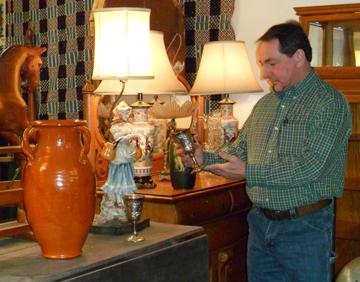
"Our most treasured family heirlooms are our sweet family memories. The past is never dead, it is not even past."
William Faulkner
A recent article on the NextAvenue.org website (http://www.nextavenue.org/nobody-wants-parents-stuff/) paints a bleak picture for the present and future value of family heirlooms.
"For the first time in history of the world, two generations are downsizing simultaneously," says Mary Kay Buysse, a senior move manager, talking about the boomers' parents (sometimes, the final downsizing) and the boomers themselves. "I have a 90-year-old parent who wants to give me stuff or, if she passes away, my siblings and I will have to clean up the house. And my siblings and I are 60 to 70 and we're downsizing."
This, it seems, is 21st-century life - and death. "I don't think there is a future" for the possessions of our parents' generation, says antique dealer Carol Eppel. "It's a different world."
According to the article, many of the staples of previous generations' households - sets of china, large pieces of solid wood furniture, centuries' old family portraits, etc. - no longer fit the lifestyles of Millennials and Gen-Xers.
"Young couples starting out don't want the same things people used to have," says Susan Devaney, a senior move manager. "They're not picking out formal china patterns anymore. I have three sons. They don't want anything of mine. I totally get it."
Mary Kay Buysse agrees. "This is an Ikea and Target generation. They live minimally, much more so than the boomers. They don't have the emotional connection to things that earlier generations did," she notes. "And they're more mobile. So they don't want a lot of heavy stuff dragging down a move across country for a new opportunity."
This phenomenon hits close to home. Over the New Year's holiday, my wife and her siblings divided and distributed the contents of their mother's large Mississippi home, which had been sold after their mother moved to a nursing home. It was a challenging, emotional time for all.
I'm happy to report that the process went smoothly and nearly everything found a new home, thanks in large measure to the fact that there are six children and 16 grandchildren who treasure their family heritage. The secret is that this family knows the family stories and has associated those stories with the physical objects that faithfully served earlier generations of the family. Mindful of that history, newer generations now cherish those heirlooms and share those narratives with their children.
It didn't happen by chance. Back in the early 1990's my wife's father, Henry Ware Hobbs, Jr., took steps to cement his children's affection for their heirlooms. He photographed every heirloom object he owned and wrote a paragraph about each item, summarizing what he knew of its history: who owned it, how they acquired it, how they used it, how it came into his possession, and any other tidbits of information. He distributed a copy of this amazing handmade catalogue to each of his children as part of the process of dividing up his possessions well in advance of his death. In other words, he related and preserved the story of each painting, chair, table, and armoire, and its role in the family's history.
Upon his untimely passing a few years later, those heirlooms were distributed to his children. As those objects found new homes, they were considered by their new owners as far more than just dishes, artwork, or pieces of furniture. They were tangible symbols of who the family was and is, and visible links between today's generations and their ancestors. They tied Henry's children to their roots and helped them answer the universal question, "Who am I?"
Story is the key. The NextAvenue.org article reinforces this point.
"Every single person, if their parents are still alive, needs to go back and collect the stories of their stuff," says financial adviser Holly Kylen.
One of Kylen's clients inherited a set of beautiful gold-trimmed teacups, saucers and plates. Her mother had told her she'd received them as a gift from the DuPonts because she had nursed for the legendary wealthy family. Turns out, the plates were custom-made for the DuPonts. The client decided to keep them due to the fantastic story.
Henry Hobbs' genius lay in understanding that children and grandchildren don't value family heirlooms unless they know both the history of the object and the history of the previous owners. Recognizing this, he then took tangible steps to convey that history to his posterity. His homemade catalogue and its collection of pictures and stories is a treasure in its own right, but it is much, much more. Like the Rosetta Stone of ancient Egypt, it was the key to unlocking the wonders of the past for current and future generations of the Hobbs family.

Physical objects with no story attached are just stuff. But they become real treasures when connected to their narrative. Stories bring those objects to life and help us understand their role in the fabric of the family. Loved ones' legacies are perpetuated when personal possessions and family stories are woven together, shared, and passed forward, generation after generation.
So, what can you do to capture, preserve, and pass on your family's artifacts and their stories?
Wednesday, February 8, 2017
Wednesday Wisdom - The Difference Between Cherry Tomatoes and Snow Peas
THE DIFFERENCE BETWEEN CHERRY TOMATOES AND SNOW PEAS

"I have been finding treasures in places I did not want to search. I have been finding beauty where I did not want to look. And I have learned so much from journeys I did not want to take."
Suzy Kassem
Here it is the middle of February and I'm still harvesting from my
fall garden and thinking about the upcoming spring planting season. Two of my
most prolific crops this time around, cherry tomatoes and snow peas, present
different harvesting challenges.
Picking cherry tomatoes is easy: when they turn red, you pluck them right off the vine. They're not at all hard to find. The only difficulty is resisting the urge to pop them into your mouth right there in the garden. If you succeed, you come home with a sweet little pile of treasure.

Picking the wily snow pea, on the other hand, is a different challenge. They are masters of disguise. They secrete themselves among the leaves in perfect camouflage. When you think you've picked them all, you can come back a minute later and pick just as many. Then you return a third, a fourth, even a fifth time and find still more. How do they hide so well?
Some of life's lessons and opportunities are like cherry tomatoes
and some are like snow peas. Some are easy to spot when they're ripe for the
picking; they're sweet and tasty. Others, however, are less obvious. You have
to search for them, and sometimes they're hiding in plain sight. They conceal
themselves among all the "stuff" of life. You think you've uncovered
them all and then you come back and discover more.
I love both, but I must say that it's more gratifying to
successfully harvest snow peas than cherry tomatoes. That which is too easily
earned or learned is not as greatly appreciated.
Now I'm wondering - was
that a snow-pea or cherry-tomato lesson I just shared?
Subscribe to:
Posts (Atom)