Sunday, November 4, 2018

Wednesday Wisdom: Farnsworth's First Law of Life, Leadership, and Roughnecks


FARNSWORTH'S FIRST LAW OF LIFE, LEADERSHIP, AND ROUGHNECKS:
Everyone you meet on the road of life has something to teach you; slow down and listen.  


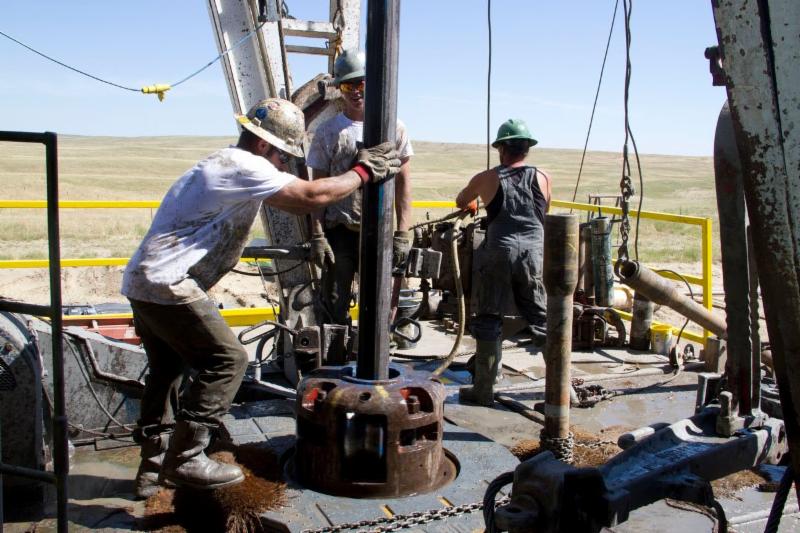
I'm still not sure how I survived the summer of 1974 on a "workover" or production oil rig (as distinguished from a drilling rig) in western Colorado. The work was back-breaking and conditions were dirty and dangerous. But it paid well, and I needed the money for college, so I stuck it out.  

I learned a lot from the colorful crew I worked with. Probably the most useful lesson those roughnecks taught me - a once-in-a-lifetime nugget from the most unlikely of sources - came on a blistering August day when I first experienced "pulling a wet string."

On the rig, no one had a name, only a nickname, a nom de guerre. At 22, I was the "Kid." If I had stuck around a little longer I might have earned a more substantial moniker, but everyone knew I was just summer help. I was definitely the odd man out in terms of lifestyle, being the only one who didn't smoke, drink, or chew. I'm pretty sure none of the others had ever set foot on a college campus or imagined going to law school.

"The Driller" or "Drill" was in charge of the crew. He wasn't much older than I but had been working on rigs since he was 14, and he was a crackerjack rig operator. He worked hard and he drank hard. On Monday mornings he liked to sing a ragged, raspy rendition of James Brown's "I Feel Good, Like I Knew That I Would." It was his way of convincing himself that his blood-shot eyes and hangover weren't all that bad. His goal was to move up to "tool pusher" - the guy who got to drive a company pickup from rig to rig and bark orders at crews like ours.   


"Grody" (named for his thick, dirty mustache that seemed to catch a piece of everything he ate or drank) was the other deck hand besides me. He was the old man of the crew, having been around the "oil patch" for nearly 20 years. He was quietly comfortable on the deck, but had no ambition to be in charge of the crew. He spent most of his weekly paychecks on weekend binges with his live-in girlfriend Teresa.

"Red" was the derrick hand. He had bright orange hair, ruddy complexion, and only one eye. He danced along a narrow perch 50 feet in the air, catching sections of tubing as they were winched up from the wellhead. He liked playing practical jokes like spitting Red Manchewing tobacco down on Grody and me from above. Grody would swear at him and threaten all forms of obscene bodily harm, but Red would just laugh. He knew Grody was afraid of heights and couldn't come after him up in the derrick.


Normally when we pulled the 2¼ miles of tubing (called the "string") up out of the well, the pipes were dry and empty because the pump at the bottom had been unseated and all the crude oil inside had run out into the well. On rare occasions, however, the pump would get stuck in the bottom of the string and the oil was trapped inside. That made that 2¼-mile-long string of pipe "wet": i.e., completely full of dark-green crude oil.    

"Pulling a wet string" was one of the vilest things that could happen on a workover rig like ours. As we started pulling the tubing full of oil up from the well and unscrewed the first 50-foot section at the derrick floor, several gallons of crude oil sprayed all over us and the deck. Then each time we pulled up and unscrewed another section, we were showered again.  

By the third or fourth time, our clothes were saturated and oil was dripping from our hair, off our hardhats, and onto our faces and necks. Our eyes were stinging and we wanted to wipe them but our gloves were heavy with oil too. Crude oil was already oozing inside our steel-toed boots and underwear. Everything we had on was ruined and would need to be burned at the end of the day.  

The deck and all the tools were slick and oily. Our brains were screaming to hurry up and get this over with, but the slimy conditions forced us to move slowly and carefully so no one would get hurt. It was like a slow-motion nightmare - trying desperately to flee but feeling like we were running through Jell-O.

After half a dozen nasty oil showers a terrible thought hit me: it wasn't even 9 a.m. yet, and there was still more than 2 miles of wet string to go. That meant enduring over 200 more sprays of oil until the last sections were finally pulled from the well. Without a doubt, I thought, this was going to be one of the nastiest, most wretched days of my life.

Around noon we stopped for lunch and were squatting in the shade, dripping oil and eating our sandwiches with greasy fingers. No one felt much like talking. The Driller finally broke the miserable silence.

"Pretty tough day, huh Kid?" he asked.

"The worst," I snorted. "If I had known this was going to happen, I would have quit yesterday."

Red chimed in sarcastically. "Hey, don't forget the extra fifty bucks wet string pay."

"Oh, really? We get an extra fifty bucks?" I asked.

"Yeah," Red explained. "They say it's to buy new clothes, but it's really just to keep the whole crew from twisting off." (That's oil patch lingo for walking off the job en masse.)

"Aw, this ain't nothin'," added Grody. "You should try doin' this in the middle of winter. Happened to me about three Januarys ago on a well over near Steamboat. Nothin' like frozen oil dripping off your nose all day. Kinda like oil icicles. Now THAT was a rough day."

"This is so disgusting. How can you stand doing this year after year? Why don't you get another job, do something different?" I queried.  

Driller scrunched up his face and almost rolled his eyes at me. "That's what you ain't figured out yet, Kid. It don't matter what you do or how much school you've got, every job's gonna have its share of wet string days.  

"Every now and again, even if you're some hot-shot attorney in a three-piece suit at a fancy law firm in downtown Denver, even then, s*** happens. It don't do no good to try and run from it. You just gotta learn to make the best of it."

"He's right," Grody echoed. "Every job's gonna have its share of wet string days. Take the good with the bad and deal with it."

* * *

"Wet String Days."  

Their words still ring in my ears. I can't say that I appreciated their wisdom that day, but it did stick with me.  

Over the years I've found their words to be true. Even the best of jobs, even the best of lives, have their share of "wet string days," days when the motor blows up, the wheels come off, and everything falls apart.

"Wet String Days."  

I've discovered that it helps to have a name for those kinds of situations. When something's labeled, it's easier to recognize it, talk about it, and find a place for it in the grand scheme of things.  

"Wet String Days."  

I've learned that life is not about avoiding "wet string days," because you can't. Life is about learning to handle them when they happen and not letting them sour you for the majority of days when the pump doesn't get stuck in bottom of the tubing and the pipes aren't full of oil and you don't have to burn all your clothes at the end of the shift.  

It's about finding joy in the journey. It's about learning some amazing lessons from the interesting people you meet along the way. Bless those roughnecks and the lessons they taught me 44 years ago this summer.


Wednesday, October 24, 2018

Wednesday Wisdom: Farnsworth's First Law of Life, Leadership, and Binoculars


FARNSWORTH'S FIRST LAW OF LIFE, LEADERSHIP, AND BINOCULARS:

It's Easier to Choose the Right Path When You Can See Farther Down the Trail


One of my favorite poems is Robert Frost's "The Road Not Taken." I can relate to his dilemma.  

Two roads diverged in a yellow wood,
And sorry I could not travel both
And be one traveler, long I stood
And looked down one as far as I could
To where it bent in the undergrowth;

Then took the other, as just as fair,
And having perhaps the better claim,
Because it was grassy and wanted wear;
Though as for that the passing there
Had worn them really about the same,

And both that morning equally lay
In leaves no step had trodden black.
Oh, I kept the first for another day!
Yet knowing how way leads on to way,
I doubted if I should ever come back.

I shall be telling this with a sigh
Somewhere ages and ages hence:
Two roads diverged in a wood, and I -
I took the one less traveled by,
And that has made all the difference.

I am thankful to live in a time and place in which we have a wide range of options in the paths of our lives. But having choices can sometimes be a little scary.

Who has not felt the heart-pangs expressed in these lyrics from "Far From the Home I Love" in the musical "Fiddler on the Roof"?

Oh, what a melancholy choice this is,
Wanting home, wanting him,
Closing my heart to every hope but his,
Leaving the home I love,

While Yogi Berra's famous counsel - "When you come to a fork in the road, take it." - is good for a laugh, it's not at all helpful with real-world decision-making. When two roads diverge in the woods of our lives, how do we decide which to take?

I have discovered two questions that, used in tandem, give me greater vision and depth perception when I am faced with serious decisions about the direction of my life. Like a pair of binoculars, they help me see further down the forks in the road ahead. They help me study out questions in my mind and get clarity for myself as I prepare to ask for divine guidance.  

The first question is "What is my purpose?" At my very core, what am I really all about? What was I put on this earth to accomplish?

I am deeply grateful to Mary Tomlinson, my friend and my partner at Legacy Planning Associates, LLC (visit www.LegacyPlans.com), for helping me distill my internal sense of purpose into a clear and succinct personal purpose statement. Her On-Purpose process allowed me to cut through a lot of verbiage and put my finger on the real me - in just two words: Connecting Families.  

Being clear about my purpose has given me greater confidence in my decision-making. When facing a fork in the road I ask myself "Which option is more likely to allow me to stay on-purpose, and which is more likely to pull me off-purpose?"

The second question is "How can I serve?" Which option will provide me the greatest opportunity to assist others and give back to the world?  

This second question keeps my life in balance. It helps me remember that it's seldom just about me; it's usually about making a difference with the people I love and the causes I support. This question helps me maintain perspective, a sense of the depth and richness of a life spent helping others. I see the world more clearly because I am not merely staring at myself in a mirror.

Without the second question, I risk becoming a self-absorbed navel-gazer, vainly thinking that the world revolves around me and that my choices are only about my own self-centered happiness. Without the second question I'm in danger of becoming microscopic and irrelevant in the larger scheme of things.  

I have found that these two questions, "What is my purpose?" and "How can I serve?" help focus, magnify, simplify, and give depth and perspective to my options. They are like a set of binoculars, allowing me to see more clearly the way forward. With them, the right choice is usually pretty obvious.

I believe the essence of an abundant, joyful life is learning to make good choices. This two-question approach has served me well through the years. Perhaps it may be useful to you too

Wednesday, October 10, 2018

Wednesday Wisdom: Farnsworth's First Law of Life, Leadership, and Vacuums


FARNSWORTH'S FIRST LAW OF LIFE, LEADERSHIP, AND VACUUMS:

Unless you fill your time with passion and purpose, worthless clutter will get sucked into your life. 


24/7.  

No matter how we do the math, it always adds up to 168 hours per week. Whether we're male or female; old or young; beautiful or plain; married, single, or somewhere in between, everyone gets the same number: 168.  

The issue is never the number of hours; it is always what we choose to do with those hours.  

Nature abhors a vacuum. If we don't fill our time with worthwhile activity, all kinds of clutter will rush in to fill the void. Before long, all that stuff smothers the life out of us.

During my 66 years on this planet, I have witnessed a quantum leap in the number of ways we can spend our time. While the amount of currency we have in our pockets has stayed the same - 168 per week - the size of the bazaar has mushroomed and the glitter of the merchandise has gotten much shinier.  

Sometimes shinier is not better. Lately it seems that much of what is for sale in the marketplace of life serves only to distract and amuse us, rather than nourish, inspire, strengthen, and connect us.  

If we're not careful, we can end up spending a large chunk of those 168 hours surfing, tweeting, watching sports, working puzzles, playing video games, and mastering virtual worlds. While such distractions may not be harmful per se, they can cut into our capacity to make a difference in the real world and can prevent us from experiencing a more abundant life.   


The hours and the energy we spend killing angry birds (or whatever is our personal drug of choice) are lost forever to doing things of more lasting value, like reading to our children, learning to paint, teaching a grandchild to fish, planting green beans, taking a walk with our spouse, strengthening our faith, or sharing stories with a shut-in.

Unfortunately, an inclination to do good is no longer sufficient to withstand the allure of mindless amusement. Today, the siren call of distractions is so powerful that only those who have found a deeper, more passionate purpose in their being and who use their time to bring that purpose to life are able to resist it.

Discovering why we are here, our purpose for being, is the only sure way to protect ourselves from the curse of shallow amusement. Knowing our purpose fills our life with direction and meaning, and crowds out clutter and drivel.

It also helps us find our passion and learn what makes us come alive. When we are doing what we truly love, we have no need for vacuous distractions.  

It is not crucial whether following our purpose and passion is our vocation or an avocation. What is important is that it engages us, inspires us, and drives us to excellence.  

When we fill the space at our core with purpose and passion, we eliminate the vacuum that sucks in less meaningful ways of using our time.   We are energized and empowered to transform the real world, and we find lasting joy in doing so. The result is a life of greater abundance.